Someone on a fishing forum once said San Diego might be the best fishing city in the country. Nobody argued with them. That’s because you can fish saltwater piers without a license, throw a line into the bay from a dozen different spots, drive an hour east and catch stocked trout in a mountain lake, or hop on a charter boat and fight a 200-pound bluefin tuna before lunch. All in the same county.
We put together 12 spots that cover every kind of fishing you can do here. Some are beginner-friendly and free. Some require a passport. All of them will put fish on the line if you show up at the right time with the right bait.
Table of Contents
Pier Fishing (No License Required)
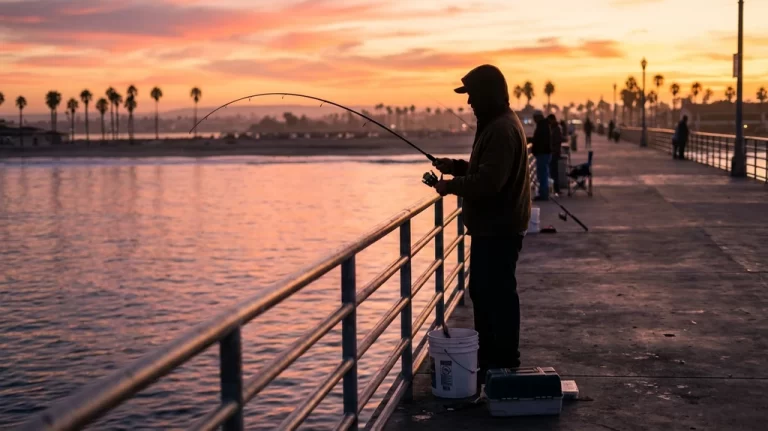
California doesn’t require a fishing license on public ocean piers. Bag and size limits still apply, but the cost of entry is basically zero. A rod, some squid from the bait shop, and you’re in business.
Shelter Island Pier
If someone asked me where to go fishing in San Diego for the first time, I’d say Shelter Island Pier without thinking about it. The bait and tackle shop is right there. The T-shaped end is almost 500 feet wide, so you have room. It’s open 24/7, though the parking lot closes at 10 PM, which is the city’s way of telling you to have a life.
Eelgrass beds around the pier structure hold spotted bay bass and halibut. Perch stack up along the pilings. When bonito run through, the whole outer edge gets busy. You can walk into the tackle shop having never held a rod before and they’ll sort you out with gear and tell you where to drop. They deal with beginners all day long and don’t make it weird.
There’s also Fathom Bistro at the end of the pier, so when the fish aren’t biting, at least there’s beer.
Spotted bay bass, halibut, bonito, mackerel, croaker, perch, opaleye. Fish the incoming tide.
Imperial Beach Pier
The southernmost pier in California. 1,491 feet long. And somehow, every time I’ve been there, quieter than it has any right to be. While Shelter Island gets the families and tourists, IB Pier gets the people who just want to fish without being shoulder-to-shoulder with strangers. Clear view of the Coronado Islands from the end. Open 6 AM to 10 PM.
Closer to shore: barred surfperch, corbina, yellowfin croaker on sand crabs or squid. Walk to the deeper water at the end for bonito and mackerel. A sabiki rig (the one with five hooks on a single line) is ridiculous here. People load up on mackerel without even using bait. I didn’t believe that until I saw it happen.
This is also a great pier if you have a kid who wants to go fishing. Restrooms, fish cleaning stations, low-stress atmosphere. They’ll catch something.
Crystal Pier
Crystal Pier in Pacific Beach is only 872 feet, which is short by San Diego standards. But the sandy bottom underneath it is exactly where halibut like to hang out, and the pier structure itself draws in kelp bass and sand bass. Then there are the cottages. Actual rental cottages, built on the pier, over the ocean. You fish next to them. It’s a strange and photogenic setup that only PB could get away with.
Bait shop and fish cleaning station on-site. Open 8 AM to 8 PM. One catch: those cottages make it a gray area for the “public pier” license exemption, and wardens have ticketed anglers here. Most people fish without a license and are fine, but a $21 one-day license eliminates the gamble.
Barred surfperch, halibut, sand bass, walleye surfperch, shovelnose guitarfish.
Oceanside Pier
1,954 feet of wooden pier reaching into 50 feet of water. That depth is the whole point. Most San Diego piers cap out around 20 to 25 feet, but Oceanside gets you into water where sheephead, calico bass, and rockfish actually live. A 2024 fire took out the restaurant at the tip, so the far end is still closed off, but 90% of the pier is fishable. Bait shop and cleaning stations are running.
Worth the drive if you’re tired of catching mackerel and want something with more of a fight. The pilings hold opaleye and sheephead. The deeper sections produce rockfish and the occasional something that makes you wish you’d brought a heavier rod.
A note on the OB Pier: closed since 2023. Storm damage. The city chose to replace the entire thing instead of patching it. Construction won’t start until 2029 at the earliest. It’s gone for a while.
Embarcadero Park Pier
Small T-shaped pier behind the convention center. Not pretty. Not famous. Most people walk right past it. Which is exactly why the regulars who fish here don’t mind talking about it less than they probably should. An eelgrass bottom and a nearby artificial reef make it catch fish out of proportion to its size.
Live bait or gulp in the eelgrass for bass and halibut. Sabiki for mackerel and bonito. Five-minute walk from the Gaslamp when you’re done.
Bonito, mackerel, calico bass, sand bass, spotted bay bass, barracuda.
Shore and Bay Fishing
Once you step off the piers, you need a California sport fishing license. $64.54 a year for residents, $21.09 for one day. If you’re going to fish more than three times, just get the annual.
Mission Bay
27 miles of shoreline, protected water, fishable year-round. Mission Bay doesn’t get the respect it deserves as a fishing spot because people think of it as the jet ski and paddleboard place. But the eelgrass flats hold spotted bay bass everywhere, and halibut move into the shallows when it warms up.
Fiesta Island is where you want to go. The east side gets maybe ten people on a full day, and the water is calm and flat. The jetties at the mouth of the bay are better for experienced anglers chasing halibut and corvina in the current. A 3-inch swimbait worked slow along the bottom is the standard approach for bass here.
Spotted bay bass, halibut, corvina, croaker, perch.
San Diego Bay, South Bay Flats
Crown Cove. Glorietta Bay. The Coronado Cays. If you fish San Diego Bay long enough, you end up at the South Bay flats. Shallow warm water over sand and eelgrass, and the spotted bay bass are thick in there from May through October. Halibut sit along the rock piles and eelgrass edges waiting for something dumb to swim by.
Harbor Island is another spot worth knowing. You fish the rocks directly in front of the airport runway. Planes landing maybe 200 feet above your head while you’re trying to set a hook. It shouldn’t work but it does.
Other spots: Shelter Island shoreline, Seaport Village, Coronado Ferry Landing (the pier there doesn’t require a license), Pepper Park in National City. The bay is so large that the pressure spreads thin. You can usually find a stretch to yourself.
Spotted bay bass, halibut, yellowfin croaker, bonefish, rays.
Torrey Pines State Beach
Surf fishing under sandstone cliffs. The non-protected sandy beaches north of the reserve are open to anglers, and the surf zone holds croaker, perch, and halibut in the troughs between sandbars. Collect sand crabs directly on the beach (free bait, and the fish prefer them to anything you’d buy). Gulp worms and shallow-diving crankbaits also work.
Watch the marine protected area boundaries. The La Jolla Ecological Reserve has real fines and they will confiscate your gear. Not a warning, not a slap on the wrist. North of Scripps Pier is restricted to bait species only until you get up toward Blacks Beach. Know the lines before you cast.
Barred surfperch, corbina, yellowfin croaker, halibut.
Freshwater Lake Fishing
San Diego County has a dozen fishable lakes, and they’re a different world from the salt. Pine trees instead of palm trees. Trout, bass, catfish, crappie. You need a state fishing license plus a daily lake permit at the gate ($5 to $10, usually cash only).
Lake Cuyamaca
The only lake in San Diego County stocked with trout year-round. At 4,600 feet near Julian, the water stays cool enough even in summer. They put in over 44,000 pounds of fish a year. That number sounds fake. It is not. Trophy rainbows, lightning trout, plus largemouth bass, smallmouth, catfish, crappie, bluegill, and white sturgeon (catch and release).
Rowboat and motorboat rentals available, or fish from shore. Either works. The hour drive up through Cuyamaca Rancho State Park is half the reason to go. Feels like you left Southern California entirely.
No catch and release on trout here. You keep what you hook, five per day. Bring a cooler.
Lake Jennings
Trout season runs November through early April with regular stocks. They dropped 1,500 pounds of rainbow trout in March 2026 alone. When trout season ends, catfish take over, and they run night fishing on Fridays and Saturdays through the summer until midnight.
Here’s what people sleep on: the bass. Sentry Cove and Half Moon Cove have drop-offs where pre-spawn largemouth hold, and they hit trout-patterned swimbaits and Senkos on drop shot rigs. The bigger bass figure out that stocking day means easy meals, so the week after a fresh stock is when you want to be out there. East County Bait and Tackle is on the drive in. Bag of shiners. You’ll catch something.
Rainbow trout, largemouth bass, channel catfish, bluegill, red-ear sunfish. Open Fri through Sun, lake permit required.
View this profile on InstagramLake Jennings (@lakejennings) • Instagram photos and videos
Lake Poway
Two things make Lake Poway stand out. First, you don’t need a state fishing license. Just the daily lake permit. That removes a barrier that stops a lot of people from ever trying. Second, it’s a 20-minute drive from most of urban San Diego. No mountain roads, no hour-long commitment.
Trout stocked from late November through April. PowerBait, Mice Tails, orange jigs. Bass and catfish year-round, though bass goes catch-and-release in March and April for spawning. Boats available to rent. If your kid has been asking to go fishing and you want the highest odds of them actually catching something, this is where you go. Saturday after, take them to Old Poway Park for the train ride.
Rainbow trout, largemouth bass, catfish, bluegill, sunfish.
Offshore Charter Fishing
San Diego has a commercial sport fishing fleet that people fly here specifically to use. Three main landings operate out of Point Loma and Mission Bay, running trips from half-day local runs to 10-day offshore expeditions down the Baja coast.
Start with a half-day ($50 to $80). They take you to the Point Loma kelp beds for calico bass, sand bass, rockfish, and sheephead. Everything you need is on the boat. If you want bigger fish, a full-day trip to the Coronado Islands ($150 to $250) gets into yellowtail, bonito, and barracuda. You need a valid passport for that one because you’re technically in Mexican waters.
Then there’s the tuna. Bluefin that go over 200 pounds, caught on 1.5 to 3-day trips. Peak season is June through August, but San Diego boats land tuna year-round because of the mild climate and proximity to offshore banks. One person on a fishing forum summed it up: “GO ON A 3 DAY TUNA TRIP OUTTA SAN DIEGO.” All caps. That person was not wrong.
The three landings:
- H&M Landing, 2803 Emerson St, Point Loma. The oldest sportfishing operation on the West Coast. Half-day through multi-day.
- Point Loma Sportfishing, 1403 Scott St, Point Loma. Home of the New Lo-An, which runs dedicated bluefin tuna trips.
- Seaforth Sportfishing, 1717 Quivira Rd, Mission Bay. Biggest fleet. Half-day to 10-day trips. Also does whale watching if you bring someone who doesn’t fish.
Fishing License Quick Guide
- Public ocean piers (Shelter Island, IB, Crystal, Oceanside, Embarcadero): no license needed
- Shore, bay, surf fishing: state license required, $64.54/year resident, $21.09 one-day
- Lakes: state license plus daily lake permit ($5 to $10). Lake Poway only needs the lake permit
- Charter boats: license required, most sell them on board
- Under 16: free everywhere
- Buy at wildlife.ca.gov
For current reports on what’s biting, sdfish.com is the local forum. Active community, people answer questions without gatekeeping their spots (mostly), and there are enough trip reports to plan around. Check it before you go.